
Wages for Housework Campaign
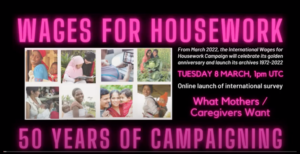
In 2022, The Bishopsgate Institute launched our archives to celebrate the 50th anniversary of the WFH Campaign and covers the years 1972 – 2022.
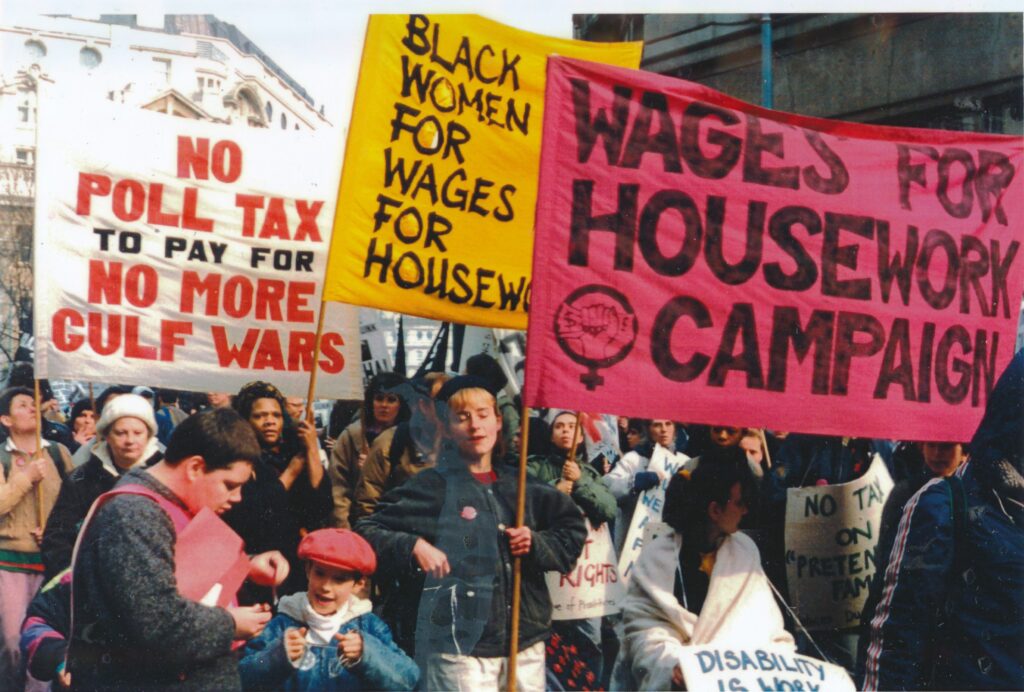
ACHIEVEMENTS
The consistent work of the WFH Campaign and the GWS in a number of countries has spearheaded a movement to put unwaged work—in the home, on the land, in the community and for the planet —on the international agenda, including:
- coined the word “unwaged” to describe the caring work women do; popularised “every mother is a working mother” and “women count, count women’s work”
- popularised the 1980 ILO figure that “women do 2/3 of the world’s work for 5% of the income and 1% of the assets” [1]
- United Nations decision to measure and value women’s unwaged work in national accounts at the Decade for Women conference in Nairobi (1985), confirmed and expanded at the follow up conference in Beijing (1995) [2]
- time use surveys and legislation in several countries[3] court decisions that recognise the unwaged contribution of women to the family; [4] industrial tribunal rulings against wage discrimination based on caring responsibilities [5]
- recognition that there is one continuum between the care and protection of people and of the planet—the care income proposed by the Green New Deal for Europe prioritises both [6]
- guaranteed income proposals in a number of countries referencing time to care; waged workers winning time off to care
- public debate on the “caring crisis” triggered by the Covid-19 pandemic
REFERENCES
[1]ILO, Women at Work (1978/1)[2]“The remunerated and, in particular, the unremunerated contributions of women to all aspects and sectors of development should be recognized, and appropriate efforts should be made to measure and reflect these contributions in national accounts and economic statistics and in the gross national product. Concrete steps should be taken to quantify the unremunerated contribution of women to agriculture, food production, reproduction and household activities.”
Paragraph 120, Nairobi Forward-Looking Strategies for the Advancement of Women, United Nations, 26 July 1985, http://www.un-documents.net/nfl-2.htm
“(i) Conduct regular time-use studies to measure, in quantitative terms, unremunerated work, including recording those activities that are performed simultaneously with remunerated or other unremunerated activities;
“(ii) Measure, in quantitative terms, unremunerated work that is outside national accounts and work to improve methods to assess its value, and accurately reflect its value in satellite or other official accounts that are separate from but consistent with core national accounts;”
Paragraph 206, Beijing Declaration and Platform for Action, UN Women, September 1995. https://www.unwomen.org/sites/default/files/Headquarters/Attachments/Sections/CSW
/PFA_E_Final_WEB.pdf[3] Trinidad and Tobago, spearheaded by the WFH Campaign there, was the first country to pass legislation: the Counting Unremunerated Work (2) Bill, 1995, was introduced by Senator Diana Mahabir-Wyatt. http://www.ttparliament.org/publications.php?id=398&mid=28
The 1999 Constitution of the Bolivarian Republic of Venezuela includes Paragraph 88, “The State recognizes work at home as an economic activity that creates added value and produces welfare and wealth. Housewives are entitled to Social Security in accordance with the law.” https://www.constituteproject.org/constitution/Venezuela_2009.pdf
In the US, the Unremunerated Work Act introduced by Representative Barbara-Rose Collins, October 24, 1991, was followed by time use surveys: History: Handbook of Methods: U.S. Bureau of Labor Statistics (bls.gov)
In Ireland, the GWS has been urging successfully for Article 41.2 of the Constitution to be reworded not deleted so the recognition of caring work in the home remains and is expanded.
Invisibility would undermine carers’ struggle for equity (irishtimes.com)
“Time to Care”, Oxfam 2020 https://www.oxfam.org/en/research/time-care[4] https://timesofindia.indiatimes.com/india/value-of-homemakers-work-same-as-hubbys-at-office-sc/articleshow/80125241.cms; Find out why housewives in Kenya might start getting paid | Pulselive Kenya[5]In 2014, a Sheehy Skeffington equality tribunal ruling noted that academic women applicants for promotion at NUIG seemed to be disadvantaged when they declared their caring responsibilities.[6] “Open Letter to Governments: A Care Income Now!”, issued by GWS and Women of Colour GWS with the Green New Deal for Europe, 27 March 2020: https://globalwomenstrike.net/open-letter-to-governments-a-care-income-now/
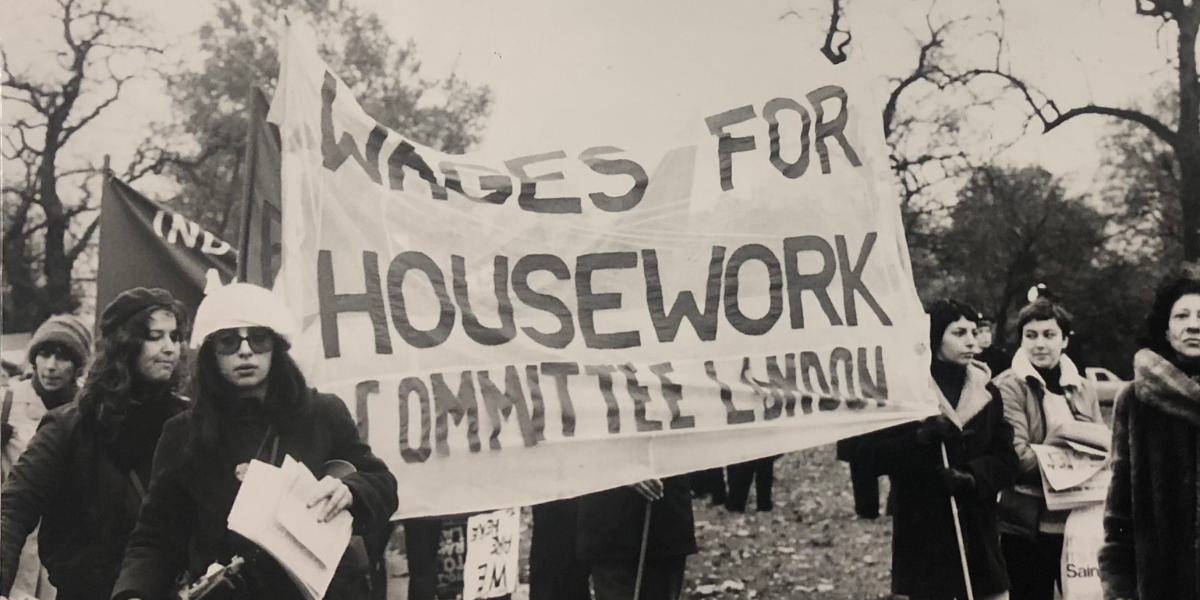
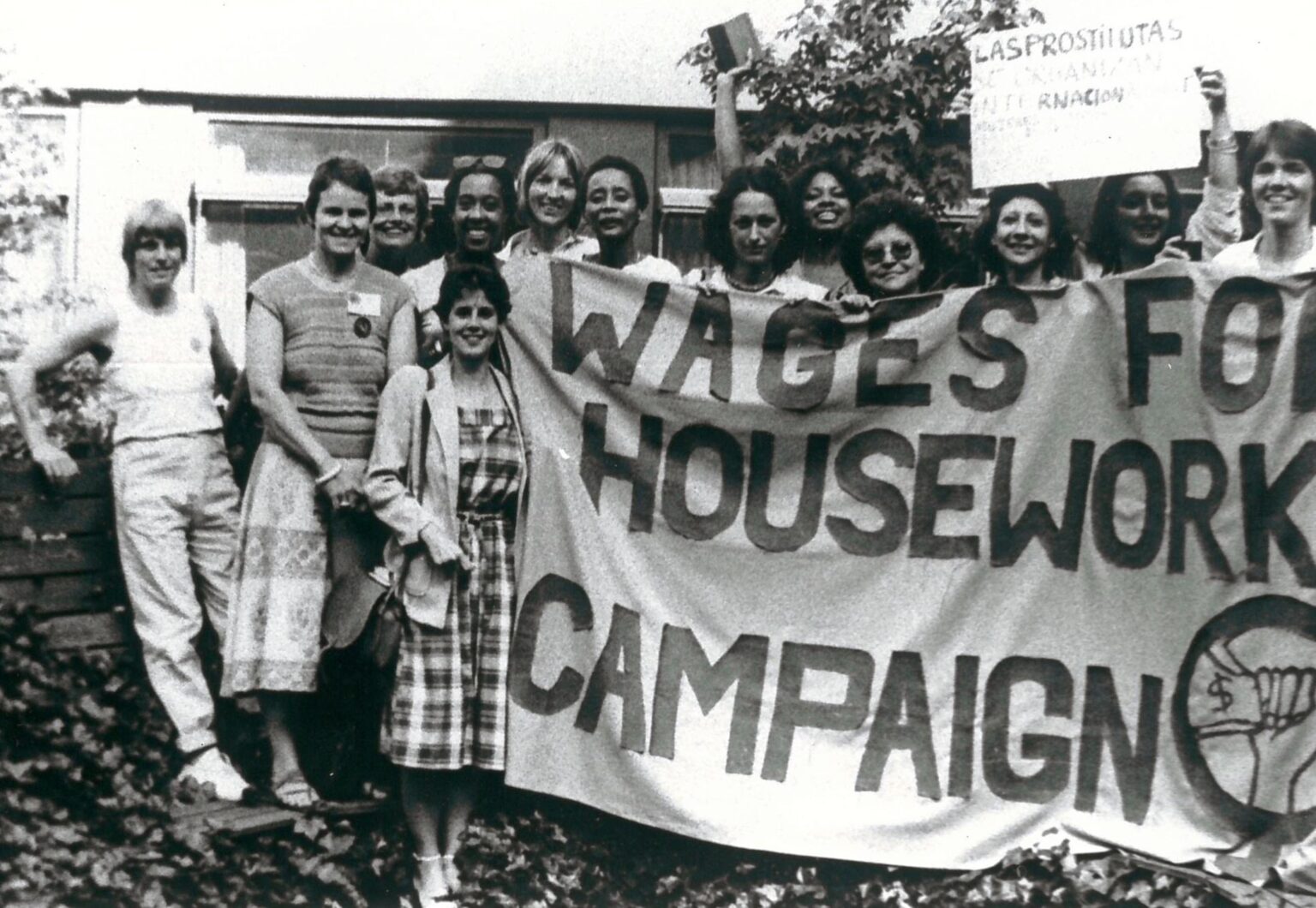
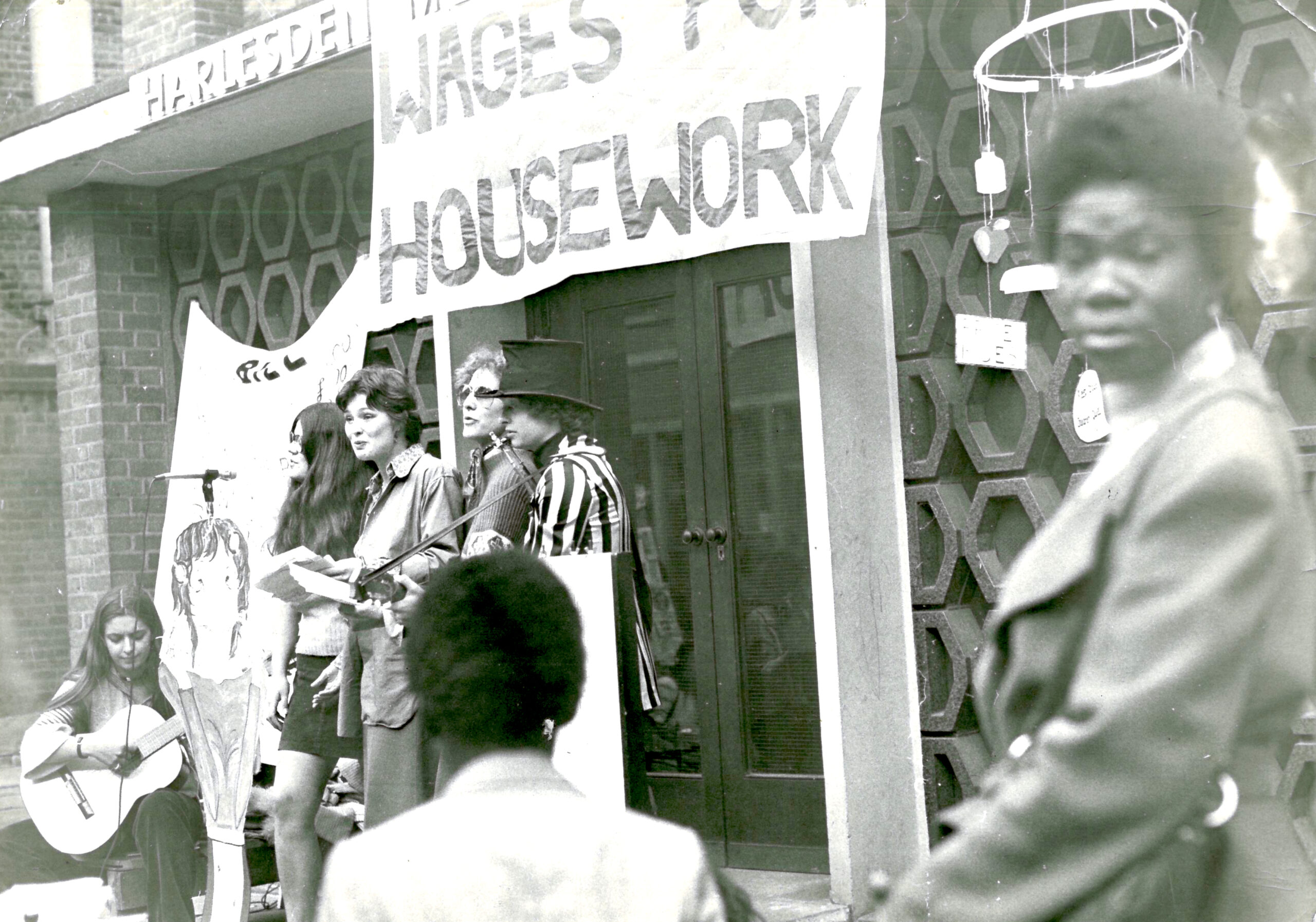
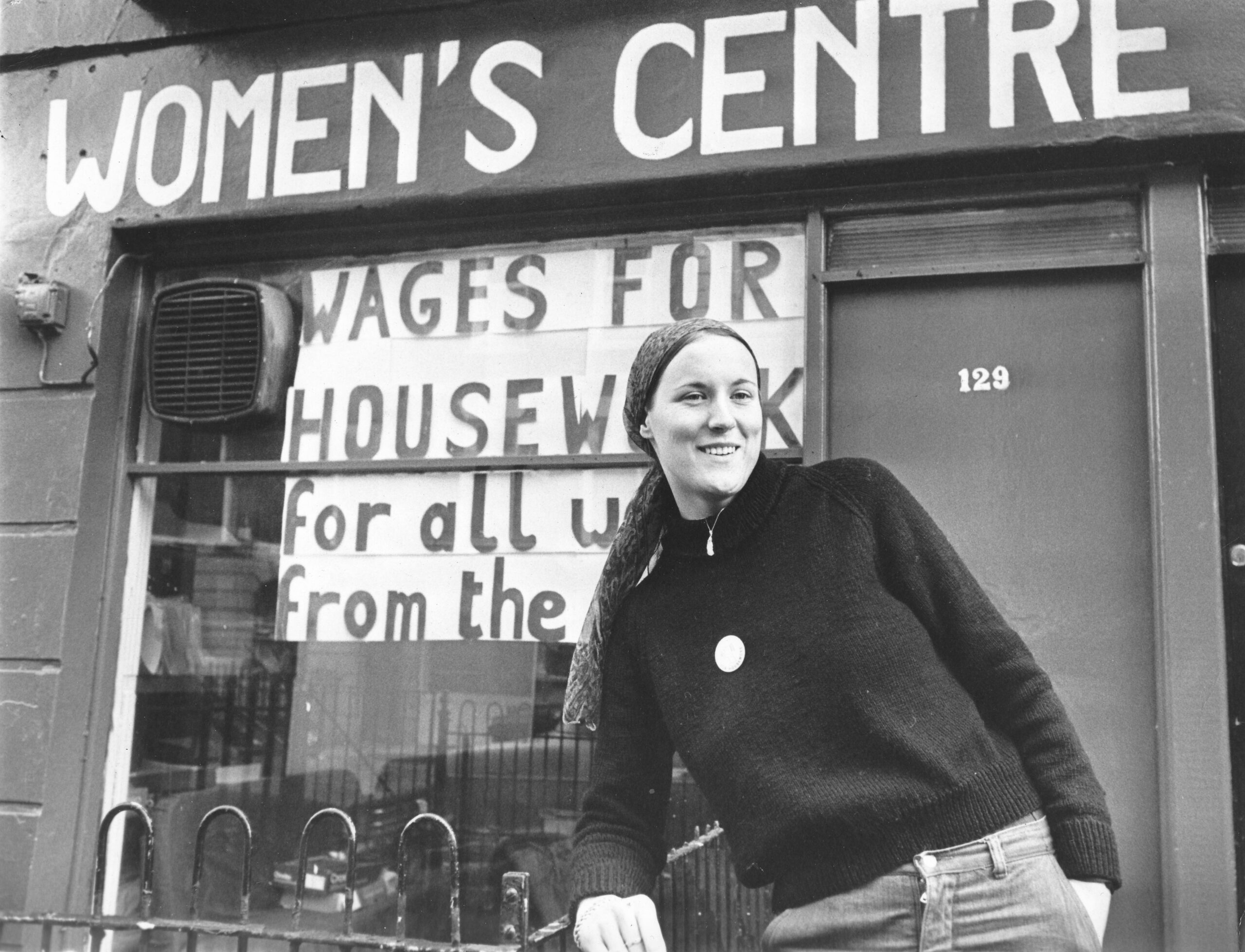
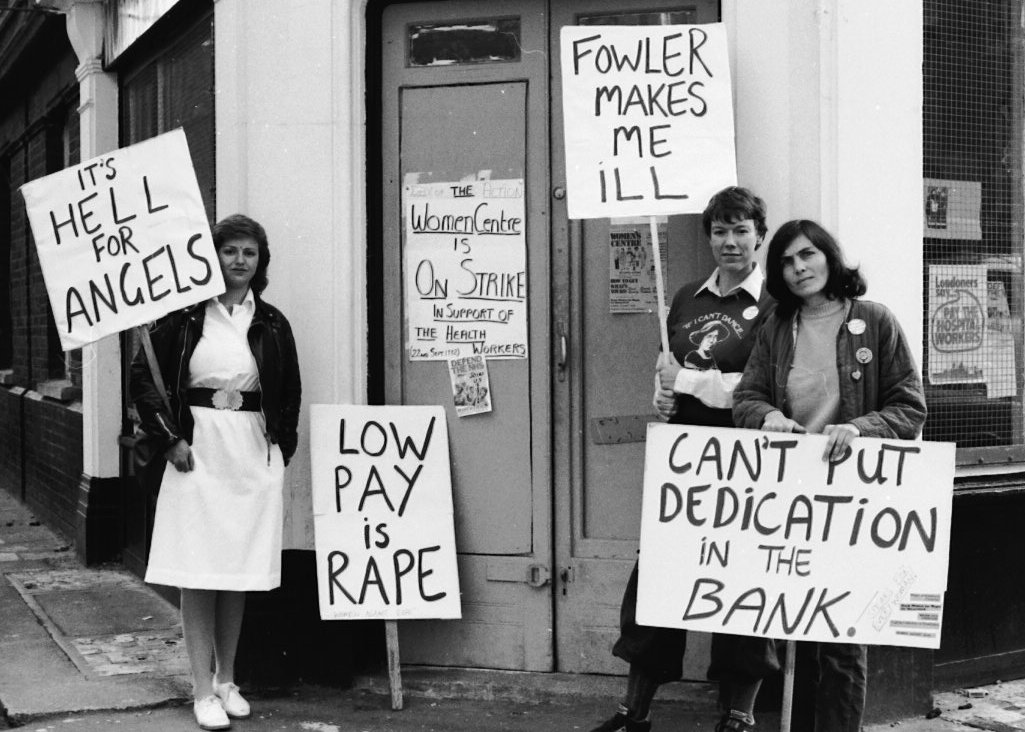
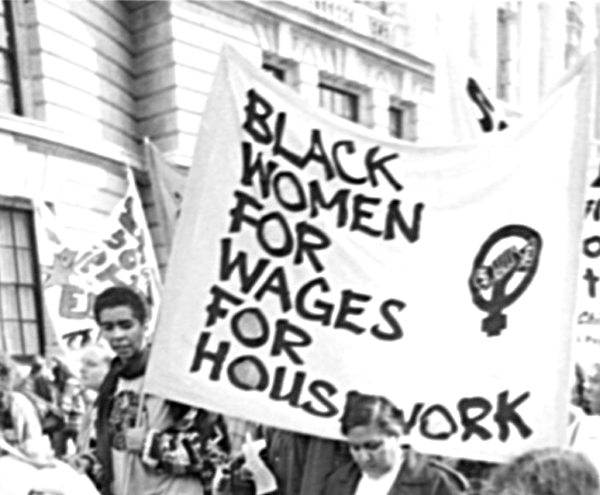
Wages for Housework – The Story of a Movement, an Idea, a Promise.
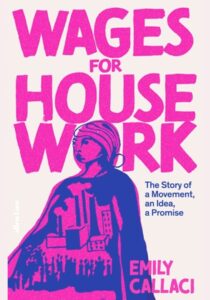
A FASCINATING BOOK by Emily Callaci about the history of the International Wages for Housework Campaign.
Wages for Housework The Story of a Movement, an Idea, a Promise features WFH founder Selma James (now in her 90s), co-ordinates the Global Women’s Strike (GWS) and is based at the Crossroads Women’s Centre in London, and Margaret Prescod, who co-founded Black Women for Wages for Housework (now best known as Women of Colour/GWS) and is based in California.
A must read in 2025 Observer: The Wages for Housework Campaign asked a provocative question. More than 50 years later, it is still relevant Guardian: I found myself nodding in agreement The Telegraph: Fascinating The Times: Thought-provoking Kirkus
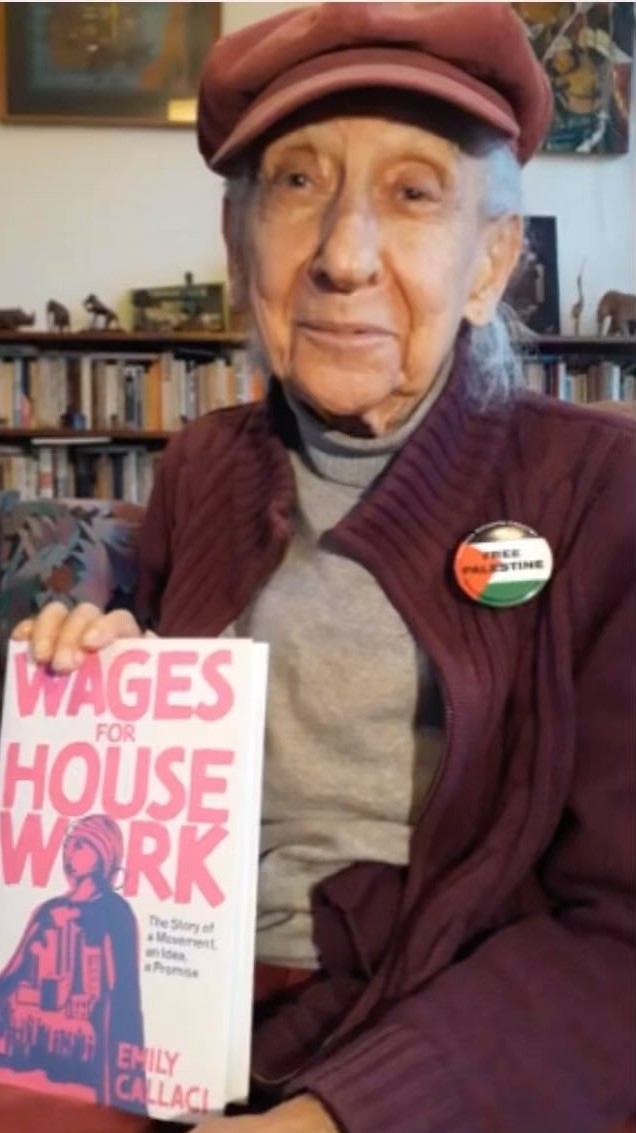
“It describes the early history of a multiracial international grassroots movement rarely acknowledged by mainstream feminism.
We are the daughters of Eleanor Rathbone (UK) and Johnnie Tillmon (US) who fought for money for mothers. Women give birth to all the people in the world, are the primary carers in every society and grow most of the food. Our struggle for an income and to save life on Earth is more urgent than ever.” Selma James

“Callaci’s book tells us what time it is. In the 80s and 90s pressure from our Global South-Global North delegation won UN recognition for women’s ‘unremunerated’ work – in the home, on the land and in the community.
The debate on paying for this vital work is louder every day. At the same time women and our children, especially if we are people of colour, are under attack. Our urging that societies ‘invest in caring not killing’ has never been more relevant.”Margaret Prescod
Callaci’s book makes clear that the WFH Campaign is very much active today:“Members of the Global Women’s Strike, headquartered at the Crossroads Women’s Centre, consider themselves the present-Day stewards of the Wages for Housework campaign. Some of them have been with the campaign since the 1970s, while others have joined in more recent years. Today they are campaigning for Care Income Now, for everyone who labors in the care of human beings and the earth, wherever they live, whatever their gender.”
For more books on WAGES FOR HOUSEWORK click here: https://crossroadsbooksonline.

Contact details
Email: gws@globalwomenstrike.net
Address: Crossroads Women‘s Centre, 25 Wolsey Mews, London NW5 2DX.
Phone: +44 20 7482 2496